

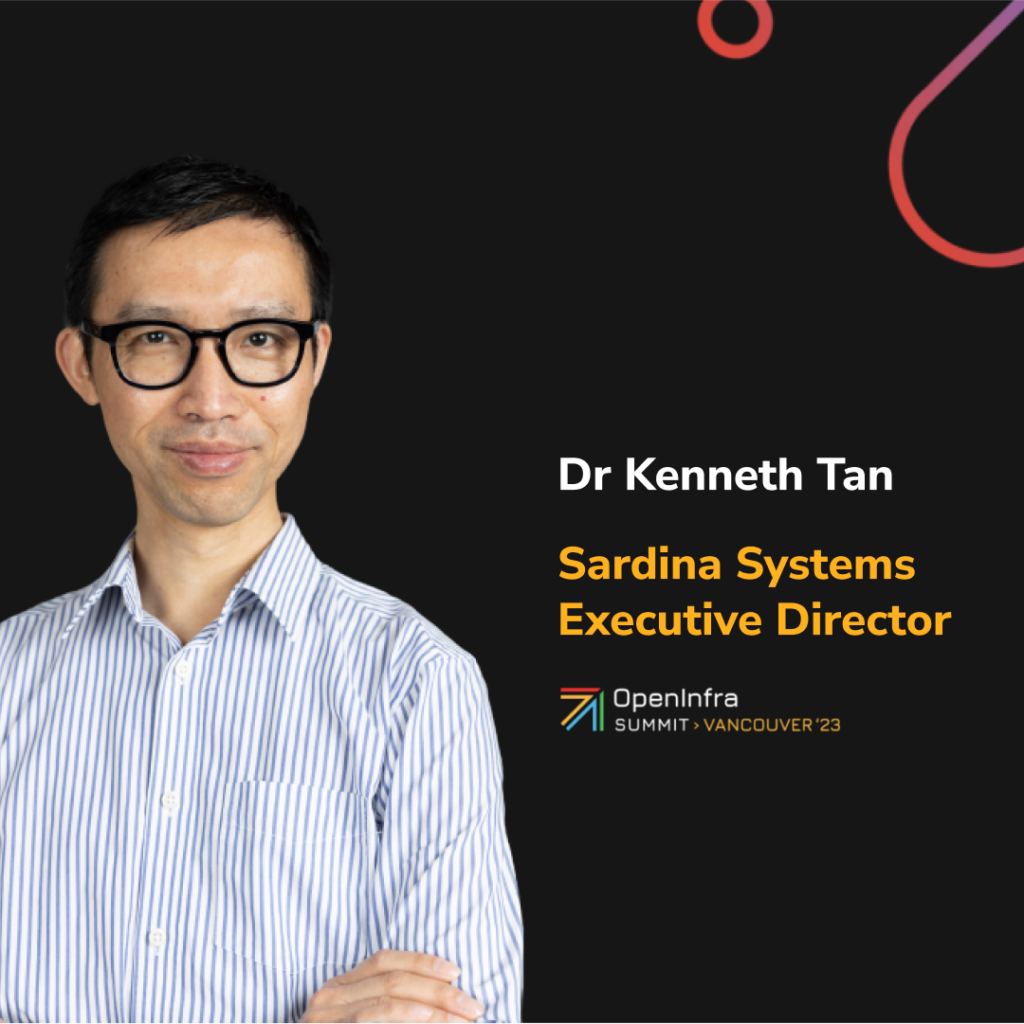

The recent OpenInfra Summit demonstrated the community’s progress in tackling challenges, but some crucial issues still need attention. Our Executive Director, Kenneth Tan, shares his insights and takeaways.
OpenStack: Expanding its Influence and Fostering Global Collaboration
The OpenInfra community has experienced significant growth in recent years, with over 10,000 developers in 65 countries and more than 110,000 community members. The community comprises 700 organisations collectively driving impressive 40 million CPU cores powered by OpenStack. The increasing demand for open-source infrastructure solutions is evident, which underscores the significance of events like OpenInfra Summit.
This year, the annual gathering brought together over 2000 IT decision-makers, infrastructure architects, and open-source developers from around the globe. It also featured various open-source infrastructure projects, including StarlingX, Kata Containers, Rocky Linux, Alma Linux, CentOS, and Ceph, fostering collaboration and knowledge sharing. Attendees had a packed schedule with over 100 breakout sessions, Project Teams Gatherings (PTGs), speed mentoring sessions, and numerous informal gatherings to facilitate communication.
Big News: Open Infrastructure Announces Two New Regional Hubs
During the summit, the OpenInfra Foundation announced the creation of two new regional hubs: OpenInfra Europe and OpenInfra Asia. These hubs aim to aggregate regional voices, address local challenges, and strengthen the overall open infrastructure ecosystem. According to Thierry Carrez, the General Manager of the Open Infrastructure Foundation, such step is crucial in a situation when ‘there are more and more geopolitical tensions and ill-informed regulations that have the potential to destroy open source and open collaboration the way we know it.’
OpenInfra Europe, in particular, is expected to play a vital role in the digital sovereignty debate. The recent Cyber Resilience Act, proposed by the EU, ‘does not take into account the specificity of Open Source, which may have chilling effects on future development,’ as Mr. Carrez pointed out. Therefore, the new hubs will carry an important mission to grow awareness and spread the Open Infrastructure community’s influence in target regions.
The Challenge That Still Puts OpenStack at Risk
One of the significant topics discussed at the OpenInfra Summit 2023 was traditionally the deployment and upgrading of OpenStack. Companies like Red Hat, Canonical, Okestro, Bloomberg, StarlingX, and StackIT showcased their solutions and shared their experiences. However, this part of the discussion revealed a significant challenge that the OpenStack community is still struggling to overcome: complexity.
Despite the risk of losing ground to the Big 4 hyperscalers, many market players are still exploring new approaches to deploy and upgrade OpenStack, some of which can take more than six months to complete. The impact of these challenges is evident in the declining percentage of enterprises adopting OpenStack, which has decreased from 31% in 2021 to just 12% this year, according to Flexera’s annual cloud report. Given these circumstances, there is a critical need to establish a simple, zero-downtime, and problem-free solution for OpenStack deployment and upgrading.
‘Finding the perfect deployment and upgrading approach for OpenStack is not a threat to OpenStack itself. The Big 4 public cloud providers are. While deployment and upgrading may present obstacles, they are 100% solvable. Let’s redirect our attention and tackle other issues to ensure the resilience and continued growth of OpenStack.’
Kenneth Tan, Executive Director, Sardina Systems
Sardina Systems found a powerful solution over seven years ago, making the issue of upgrade complexity nonsensical for the company. Coincidentally, we have recently completed a flawless upgrade for Datacomm, one of the leading IT service providers in Indonesia. We facilitated a seamless transition from Wallaby to Xena to Yoga in a mere four days. ”That can’t be true!” some may argue. And they would be correct. In reality, the process took us five days, which included one day of preparation.
Overall, this achievement serves as a testament to what clients can expect when adopting our FishOS. To learn more about our successful deployment and upgrading approach and how it can revolutionize OpenStack, study our article here.
Staying True to the Mission
Despite the outlined challenges, the OpenInfra Summit Vancouver 2023 can be considered a success. It brought together industry leaders, project teams, and IT professionals, highlighting the key value of open infrastructure projects: the power of community and collaboration. The summit featured over 10 tracks that covered various aspects of open-stack infrastructure, including 5G, NFV & Edge computing, CI/CD software development pipelines, sustainability, data center operations, hardware standards, container infrastructure, private and hybrid cloud environments, and public cloud platforms. Notable events included panel discussions on edge computing and containerisation, technical sessions, workshops, and presentations.
Overall, the OpenInfra Summit traditionally served as a testament to the global collaboration and innovation fostered by the open infrastructure community, bringing together such organisations as Canonical, Red Hat, StarlingX, Bloomberg, CERN, and others, all united by a shared vision of advancing open infrastructure solutions. Keynotes and sessions extolling the virtues of OpenStack and other projects like Kata for containers and security and StarlingX for helping to push OpenStack out to the edge proved the world that OpenStack is alive and ready to continue spreading its influence and mission.